
Science
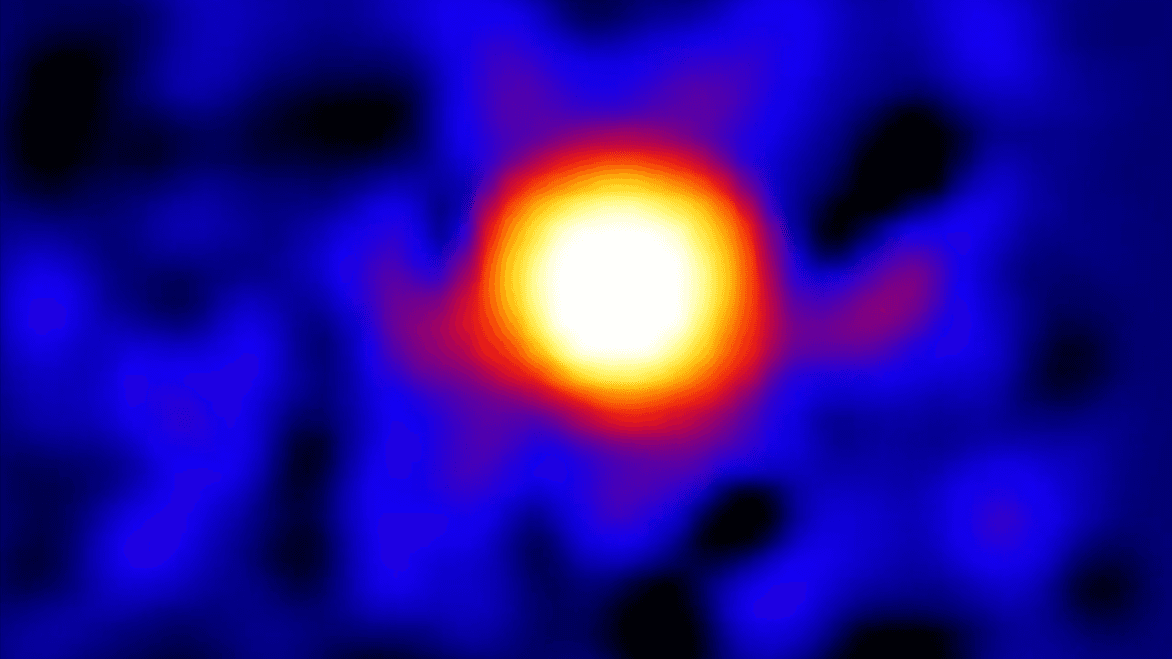
In a groundbreaking observation, astrophysicists from Northwestern University have captured the most detailed and prolonged view of the supermassive black hole at the heart of the Milky Way, Sagittarius A* (Sgr A*), using NASA's James Webb Space Telescope (JWST). This remarkable study reveals that the black hole's accretion disk is in a state of constant activity, emitting a diverse array of flares that range from brief flickers to intense daily eruptions.
The Significance of Sagittarius A*
Sgr A* is a behemoth, with a mass equivalent to billions of suns, located just 26,000 light-years from Earth. Its proximity makes it an ideal subject for studying the dynamics of supermassive black holes. The accretion disk surrounding Sgr A* is a swirling vortex of gas and dust, which is the primary source of light emitted by the black hole.
Observations and Discoveries
Using JWST's Near Infrared Camera (NIRCam), the team observed Sgr A* over a period of 48 hours, divided into 8-to-10-hour increments across one Earth year. This allowed them to create a time-lapse-like view of the black hole's activity. The findings, published in The Astrophysical Journal Letters, show that Sgr A*'s accretion disk is always bubbling with activity, never reaching a steady state.
"We observed the black hole multiple times throughout 2023 and 2024, and we noticed changes in every observation. We saw something different each time, which is really remarkable. Nothing ever stayed the same," noted Farhad Yusef-Zadeh, a study co-author and astrophysicist at Northwestern University.
The Flare Phenomenon
The team observed about five to six major flares, interspersed with several smaller sub-flares. These flares varied in brightness and duration, from brief flickers lasting mere seconds to faint, steady emissions that persisted for months. The activity was described as "ongoing fireworks" with no discernible pattern.
The short, faint flickers are believed to result from minor disturbances within the accretion disk, similar to solar flares. These disturbances compress hot plasma, leading to temporary bursts of radiation. In contrast, the larger, brighter flares are thought to be caused by magnetic reconnection events, where colliding magnetic fields release energy in the form of accelerated particles.
Time Delays and Future Studies
A surprising discovery was the time delay between flares observed at different wavelengths. Events at shorter wavelengths changed brightness before those at longer wavelengths, with delays ranging from a few seconds to 40 seconds. This phenomenon provides insights into the physical processes occurring around the black hole, suggesting that particles lose energy more quickly at shorter wavelengths.
Future studies aim to extend observation times to reduce noise and uncover finer details. Yusef-Zadeh hopes to observe Sgr A* for an uninterrupted 24-hour period, which could reveal whether these flares exhibit periodicity or remain random.
Conclusion
The study of Sgr A* offers a unique window into the behavior of supermassive black holes and their interaction with their surroundings. As scientists continue to unravel the mysteries of these cosmic giants, they are not only gaining insights into the fundamental nature of black holes but also shedding light on the evolution of our own galaxy.
Source:
Laura Baisas, Popular Science https://www.popsci.com/science/milky-way-black-hole/
Image Credit: Farhad Yusef-Zadeh/Northwestern University