
Science
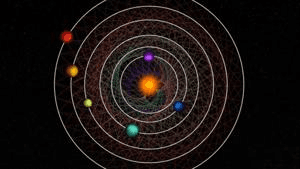
The search for extraterrestrial life has captivated human imagination for centuries, and recent advancements in astronomy have brought us closer to answering this profound question. As we explore the vast expanse of the universe, certain star systems emerge as promising candidates for hosting life. Let's delve into the factors that make a star system potentially habitable and explore some of the latest findings.
What Makes a Star System Habitable?
For a star system to be considered habitable, it must possess a few key characteristics:
Habitable Zone (HZ): The HZ, often referred to as the "Goldilocks zone," is the region around a star where temperatures are neither too hot nor too cold for liquid water to exist on a planet's surface. Liquid water is essential for life as we know it24.
Stellar Type: Different types of stars have varying effects on the habitability of their planets. For instance, F-type stars are hotter and more massive than our Sun, with wider habitable zones but shorter lifespans26.
Planetary Characteristics: The size, composition, and atmospheric conditions of a planet also play crucial roles in determining its habitability4.
Recent Discoveries and Potential Candidates
Nearby Star Systems
NASA's Chandra X-ray space telescope has created a 3D map of nearby stars, helping to identify potential targets for future searches. These stars are within 16.3 to 49 light-years from Earth, close enough for telescopes to analyze the spectra of planets in their habitable zones1.
F-Type Star Systems
Recent research highlights F-type stars as intriguing candidates for hosting life. Despite their shorter lifespans, these stars have larger habitable zones, increasing the likelihood of finding planets with conditions suitable for life. However, the planets identified so far are too massive to be Earth-like, but they could host moons capable of supporting life36.
Multi-Star Systems
Some multi-star systems have been found to have stable habitable zones, offering another avenue for life to exist. These systems can provide unique conditions that might support life on planets or moons within them7.
Conclusion
While we have not yet found definitive evidence of alien life, ongoing research and technological advancements suggest that discovering signs of life elsewhere in the universe is increasingly plausible. The exploration of nearby star systems, F-type stars, and multi-star systems represents significant steps forward in this quest.
Sources:
Harris Miller, BBC Journalist (for general context on the search for alien life)
Edward Schwieterman, University of California, Riverside (for insights on nearby star systems)
Shaan Patel, University of Texas at Arlington (for research on F-type star systems)
EarthSky (for information on multi-star systems)