
Science
Animal
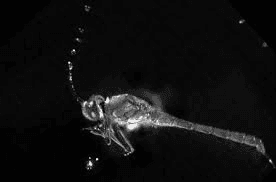
In the world of insects, few creatures are as agile and mesmerizing as the dragonfly. Known for their lightning-fast aerial maneuvers, these insects have long fascinated scientists and nature enthusiasts alike. Recently, researchers have uncovered a unique behavior that showcases the dragonfly's incredible agility and adaptability: a daring dive into water followed by a series of breathtaking loop-the-loops.
This remarkable stunt, dubbed "dunk-and-spin," is not just a display of acrobatic prowess; it serves a crucial purpose. Dragonflies use this behavior to cool down and dry off, a necessity in their warm and active lifestyle. Every few minutes, a dragonfly will dive into water, then take off again, performing several forward somersaults as it ascends. This rapid spinning helps flick away excess water, much like an animal shaking itself dry.
The Science Behind the Spin
Biomechanists from Imperial College London, led by Huai-Ti Lin, have been studying this phenomenon using high-speed video cameras. They observed that dragonflies perform these dives about once every 10 minutes, with the insects spinning up to an astonishing 2000 revolutions per minute—a speed that surpasses even the fastest washing machines. This is the only known multirevolution flight maneuver in flying animals, making it a truly unique behavior.
To understand why dragonflies engage in this behavior, researchers inserted temperature-sensitive wires into the insects' muscles. They found that the muscles powering the dragonfly's wings can quickly reach lethal temperatures, especially in warm environments. The periodic dip in water acts as a cooling mechanism, allowing the dragonfly to rapidly lower its body temperature. If a dragonfly were to seek shade instead, it would take significantly longer to cool down—5 to 10 minutes compared to just 90 seconds when wet.
The Risks and Rewards
While this behavior is effective for thermoregulation, it comes with risks. Approximately one in four dragonflies eventually drowns during these dives. However, the alternative—seeking shade—could mean losing control of their territories, which are crucial for mating and reproduction. This highlights the constant danger of overheating that insects face during active flight.
A Testament to Adaptation
The dunk-and-spin maneuver is not only a testament to the dragonfly's agility but also a reflection of its ancient adaptation to its environment. Given its widespread occurrence among dragonfly species, this behavior is likely very old, underscoring the evolutionary pressures that have shaped these insects' remarkable abilities.
In conclusion, the dragonfly's dunk-and-spin behavior is a remarkable example of how nature can inspire awe and curiosity. It shows us that even the smallest creatures can exhibit extraordinary feats of agility and resilience, reminding us of the intricate and fascinating world of insects.
Source:
Elizabeth Pennisi, Science Magazine https://www.science.org/content/article/absolutely-insane-dragonfly-s-extreme-loop-loops-are-unparalleled-nature
Image Credit: Samuel Fabian, Alex Yarger, Huai-Ti Lin