
Science
Animal
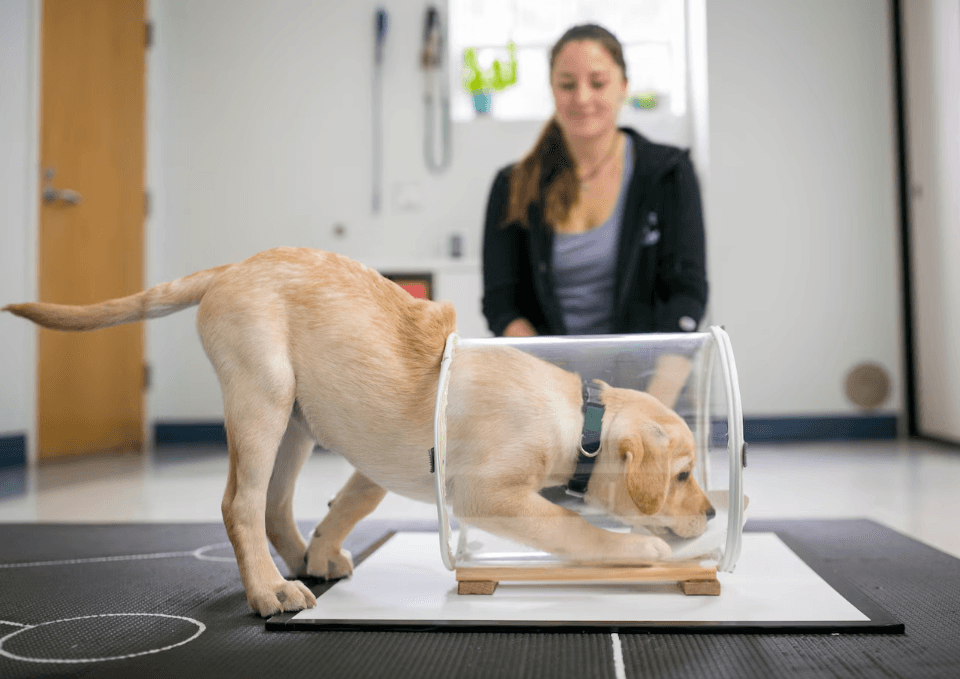
In a unique kindergarten setting at Duke University, researchers are uncovering the fascinating world of puppy cognitive development. Inspired by methods used to study human children, this innovative program aims to understand when and how puppies acquire key skills, from memory and self-control to understanding human gestures and seeking help from humans. This groundbreaking research not only helps identify potential service dogs but also provides valuable insights for new dog owners on how to raise well-behaved pets.
The Puppy Kindergarten Program
At Duke's Puppy Kindergarten, researchers Brian Hare and Vanessa Woods have developed a curriculum modeled after techniques used in child psychology. The program involves a cohort of Labrador and Labrador-Golden retriever puppies, half of whom live at Duke while the other half are raised in volunteer family homes. This setup allows for a comprehensive study of cognitive milestones in puppies between eight and 20 weeks old. Additionally, data from nearly 50,000 pet dogs of various breeds, collected through the Dognition project, further enriches the understanding of canine cognitive development.
Cognitive Milestones in Puppies
Memory Emerges (8 weeks)
Puppies begin to develop memory around eight weeks, enabling them to recall hidden treats even after distractions. This milestone is crucial for training, as it indicates that young dogs aren't disobedient; they simply can't remember instructions before this age.
Self-Control and Understanding Human Gestures (10 weeks)
By ten weeks, puppies demonstrate self-control by navigating around obstacles to reach treats and master understanding basic human gestures like pointing. This early ability to read human communication is more advanced than that of great apes and suggests an innate capacity developed through domestication.
Seeking Human Help (13 weeks)
At 13 weeks, puppies start using social problem-solving by looking to humans for assistance when faced with unsolvable tasks. This behavior is reinforced by increased eye contact, which plays a vital role in bonding between dogs and humans.
Understanding the Physical World (13 weeks)
Puppies also begin to grasp physical concepts, such as recognizing objects connected to them (like leashes) and understanding spatial relationships (e.g., which towel has a bowl underneath).
Reversing Learned Behaviors (14 weeks)
By 14 weeks, puppies can solve complex problems by reversing previously learned behaviors when they no longer work. This cognitive flexibility is essential for advanced training and problem-solving.
Implications for Dog Owners and Service Dogs
Understanding these cognitive milestones can significantly improve dog training and behavior management. For instance, knowing that puppies before 13 weeks are unlikely to manipulate owners during nighttime barking can guide how owners respond to such situations. This research also helps predict which puppies might excel as service animals, as they need to fit seamlessly into family environments and exhibit polite behavior in public settings.
In conclusion, Duke's Puppy Kindergarten offers a unique window into the cognitive development of puppies, providing insights that can enhance the bond between humans and dogs. By recognizing these milestones, dog owners can tailor their training approaches to better support their pets' growth and development.
Source:
Brian Handwerk, National Geographic https://www.nationalgeographic.com/animals/article/how-to-raise-a-great-dog
Image Credit: Duke University