
World
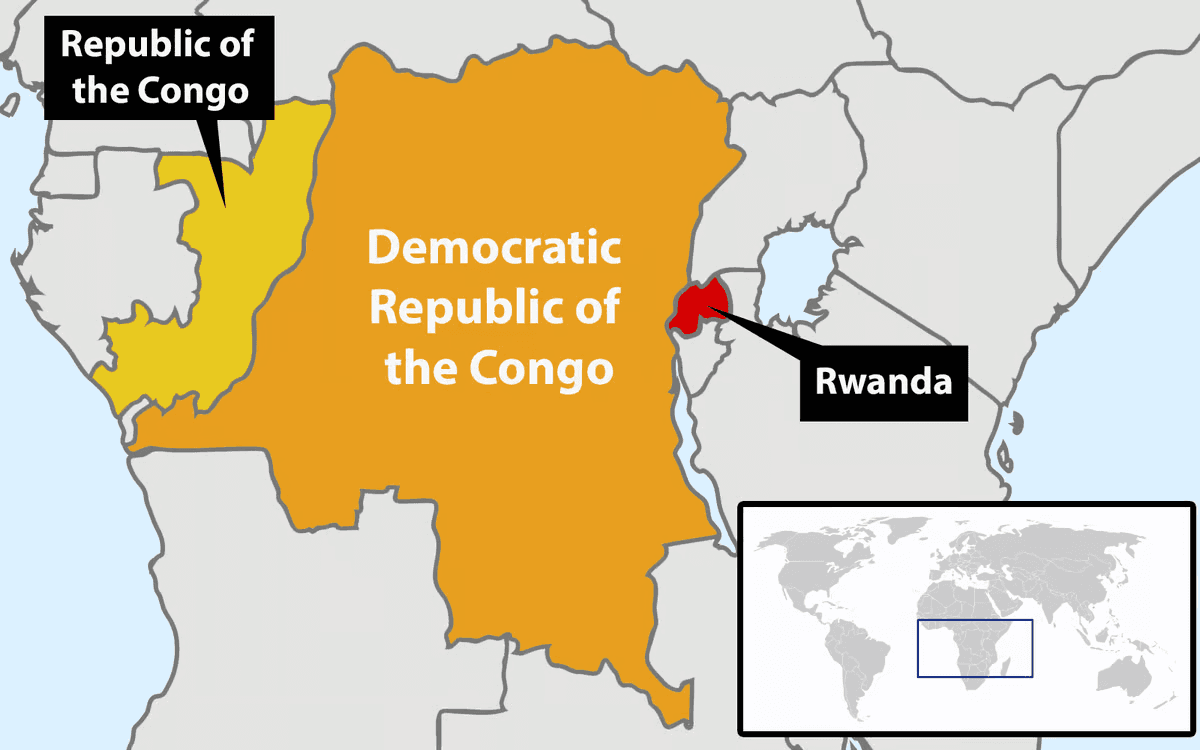
Based on reports from BBC News, UK Minister of State Chris Philp's apparent confusion between Rwanda and the Democratic Republic of Congo during a recent BBC Question Time episode has sparked discussions about the distinct identities of these two African nations and their complex historical relationship.
Rwanda vs. DRC Geography
Geographically, Rwanda and the Democratic Republic of Congo (DRC) are vastly different in size and landscape. Rwanda, a landlocked country in East Africa, covers approximately 26,338 square kilometers, while the DRC spans a massive 2,344,858 square kilometers, making it about 89 times larger than its smaller neighbor1. This significant size disparity is reflected in their populations, with Rwanda home to roughly 12.9 million people compared to the DRC's approximately 108.4 million inhabitants23.
Despite their size difference, both countries share a border and have distinct economic profiles. Rwanda boasts a higher GDP per capita at $3,000, compared to the DRC's $1,500 as of 20232. The Rwandan economy is predominantly rural and agrarian, with agriculture accounting for about 63% of export earnings, while the DRC's economy is more diverse but faces challenges with much economic activity occurring in the informal sector45.
Historical Conflicts: Genocide and M23
The 1994 Rwandan genocide profoundly impacted relations between Rwanda and the Democratic Republic of Congo (DRC), leading to a series of conflicts. Following the genocide, millions of Hutu refugees, including some extremists, fled into the DRC (then Zaire), prompting Rwanda to launch military campaigns across the border1. This intervention sparked the First and Second Congo Wars, further destabilizing the region.
More recently, the M23 rebel group, allegedly backed by Rwanda, has been a source of ongoing tension. The Tutsi-led M23 claims to protect Tutsi interests in eastern DRC, accusing the Congolese government of failing to integrate Tutsis into its military and administration23. These conflicts have resulted in significant displacement and casualties, with accusations of "systematic plundering" of Congolese resources by Rwanda4, highlighting the complex and volatile nature of their relationship.
Current Rwanda-DRC Tensions
In early 2025, diplomatic relations between the Democratic Republic of Congo (DRC) and Rwanda deteriorated significantly, leading to a complete severance of ties amidst escalating violence in the Kivu region1. This latest flare-up is part of a long-standing conflict, with Rwanda accused of supporting the M23 rebel group operating in eastern DRC. A recent UN report has further fueled tensions by alleging Rwanda's involvement in aiding the M232. The situation has raised concerns about regional stability, with fears that the conflict could spread beyond the immediate border areas and potentially destabilize neighboring countries.
BBC Question Time Clarification
During a recent episode of BBC's Question Time, Minister of State Chris Philp faced criticism for appearing to confuse Rwanda and the Democratic Republic of Congo1. The incident occurred when an audience member from the DRC asked a question about the UK's Rwanda asylum plan2. Philp's response, which seemed to question whether Rwanda and Congo were different countries, sparked controversy and led to widespread criticism from opposition parties3. The minister later clarified that his question was "rhetorical"4, but the exchange highlighted the need for greater awareness of African geopolitics among UK politicians, especially given the complex historical and current relations between these nations.
Source: Jennifer McKiernan, BBC https://www.bbc.com/news/uk-politics-68903573