
Business
Life Style
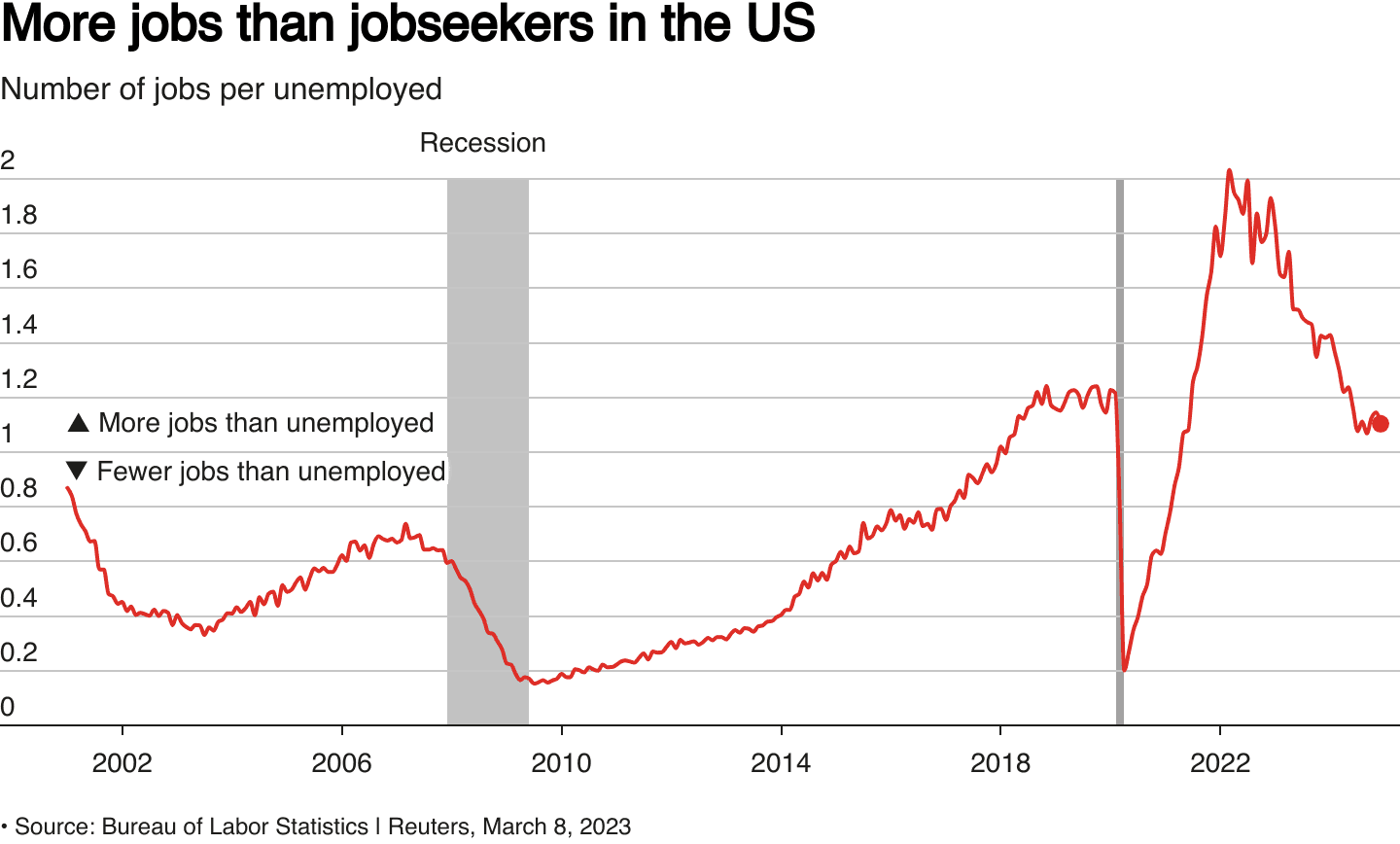
In recent years, the U.S. labor market experienced a significant shift, transitioning from a period of high job switching to a more stable environment. This change is highlighted by a decrease in job openings and a reduction in workers quitting their jobs.
The Job Switching Era
Until recently, the U.S. job market was characterized by a high level of job switching, often referred to as the "Great Resignation." This phenomenon was driven by a strong economy and a surplus of job openings, allowing workers to seek better opportunities. In March 2022, there were approximately two job openings for every unemployed worker, creating a favorable environment for job seekers to switch roles in pursuit of higher wages, better benefits, or improved working conditions.
Current Trends
However, the landscape has changed. As of now, there are only about 1.1 job openings per unemployed worker, marking a significant decline from the peak in March 2022. This reduction in job openings reflects a shift towards a more balanced labor market, where the power dynamics between employers and employees are becoming more even.
Furthermore, the number of workers quitting their jobs has also decreased. In 2024, Americans voluntarily left 39.6 million jobs, which is an 11% decline from the previous year and a 22% drop from the high point in 2022, according to Labor Department data1. This decrease indicates that fewer workers are opting to leave their current positions, possibly due to fewer opportunities for advancement or better compensation.
Implications
The shift in the labor market has several implications for both employers and employees:
Employers: With fewer job openings and a decrease in worker turnover, employers may face less pressure to increase wages or improve benefits to retain talent. However, they must still focus on creating a competitive work environment to attract and retain skilled workers.
Employees: While there are fewer opportunities for job switching, employees may need to focus on developing skills and negotiating within their current roles for better conditions or promotions.
Conclusion
The U.S. labor market is undergoing a transformation, moving from a period of high job mobility to a more stable and balanced environment. This shift reflects broader economic changes and highlights the need for both employers and employees to adapt to the evolving job market dynamics.
Image Credits:
Main Image: A photo of a bustling office environment, symbolizing the shift in the labor market. (Source: Unsplash)
Sources:
Matt Grossman, The Wall Street Journal https://www.wsj.com/economy/jobs/job-market-fewer-workers-quitting-economy-bef34675