
Politics
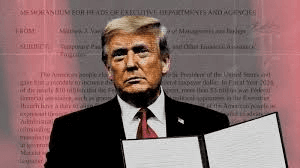
In a move that sent shockwaves through Washington, President Donald Trump's administration issued a memo last week to pause up to $3 trillion in federal grants and loans. The stated purpose was to conduct a comprehensive review of federal funding, aiming to eliminate progressive initiatives and align government spending with Trump's executive orders. However, this bold step was swiftly met with legal resistance, as U.S. District Judge Loren AliKhan blocked the freeze just before it was set to take effect, scheduling oral arguments for the following week.
This legal battle could become the first major test of Trump's second term, potentially restoring a presidential power last exercised by Richard Nixon. If successful, it could expedite Trump's radical reshaping of government, as outlined during his campaign. Conversely, even if the administration loses, some in Trump's inner circle view this as a strategic maneuver to push the boundaries of presidential authority, setting the stage for future policy initiatives.
The stakes are high, affecting millions of Americans reliant on federal assistance and international aid recipients, including Ukraine and nations grappling with crises like famine and HIV/AIDS. The Trump Administration risks appearing ineffective early in its tenure if the freeze is deemed unconstitutional.
The Memo and Its Impact
The memo from the White House's Office of Management and Budget targeted programs related to diversity, equity, and inclusion (DEI), as well as the Green New Deal, a sweeping climate proposal that has never been passed by Congress. The document created confusion among federal agencies, with many civil servants uncertain about the fate of programs like Medicaid and Head Start.
Democrats swiftly condemned the move as destructive and unconstitutional, citing the Impoundment Control Act of 1974, which prohibits the President from withholding congressionally authorized funds. Sen. Chuck Schumer, the top Senate Democrat, described it as "a dagger at the heart of the average American family."
Historical Context and Legal Challenges
Trump's attempt to restore impoundment power echoes Nixon's tactics, who used this authority to block funding for subsidized housing and the Environmental Protection Agency. After Nixon's departure, Congress passed the Impoundment Control Act to ban such practices. Trump and his advisors, including OMB nominee Russel Vought, have been planning to challenge this statute's constitutionality.
The upcoming court ruling will determine whether Trump's order passes legal muster. Some conservative legal scholars, like Harvard's Jack Goldsmith, question the constitutionality of unilaterally impounding funds, viewing it as an aggressive assertion of presidential power.
Ultimately, the courts will decide whether Trump's memo is lawful, potentially setting a precedent for future presidential authority. The outcome will significantly impact not only Trump's ability to fulfill campaign promises but also the lives of millions dependent on federal assistance.
Source:
Eric Cortellessa, Time Magazine https://time.com/7210782/trump-freezes-federal-aid-impoundment
Image Credit: www.evergreenaction.com