
World
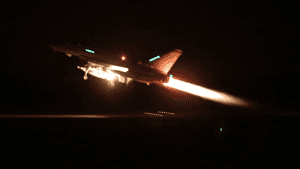
On January 11, 2024, a significant military operation unfolded as the United States, in collaboration with the United Kingdom and other international partners, launched airstrikes against Iran-aligned Houthi militants in Yemen. This action was part of a broader effort to protect maritime security and freedom of navigation in the Red Sea, a critical global shipping route.
Background
The Houthi rebels, officially known as Ansar Allah, have been involved in the Yemeni civil war since 2014. Their alignment with Iran has been a key factor in the conflict, with Iran providing military support, including weapons and training, to bolster the Houthis' capabilities. This alliance has allowed the Houthis to project power beyond Yemen's borders, notably in the Red Sea, where they have targeted commercial and military vessels.
The Strikes
The US-led airstrikes were a response to repeated Houthi attacks on international shipping in the Red Sea. These attacks included the use of drones and missiles, which have threatened global trade and maritime safety. The strikes involved a combination of fighter jets and Tomahawk cruise missiles launched from US Navy ships and a submarine, with the UK also participating in the operation.
International Response
The operation was supported by several countries, including Australia, Bahrain, Canada, and the Netherlands. The UK Ministry of Defence confirmed British involvement, emphasizing the need to protect freedom of navigation and trade1. The strikes targeted Houthi capabilities, including unmanned aerial vehicles (UAVs), uncrewed surface vessels, and coastal radar systems, aiming to degrade their ability to launch attacks on shipping1.
Houthi Response
Following the airstrikes, Houthi leaders vowed to retaliate, with Brig. Gen. Yahya Saree stating that the attacks would not go unanswered. The Houthis have continued to target vessels in the region, including US and Israeli ships, as part of their broader strategy to influence regional conflicts.
Impact on Maritime Security
The ongoing conflict has significantly impacted maritime traffic in the Red Sea. Many shipping companies have opted to reroute vessels around Africa to avoid the risk of Houthi attacks, increasing journey times and costs. The situation highlights the challenges of maintaining security in critical waterways and the potential for further escalation in the region.
Conclusion
The US-led strikes against Houthi militants underscore the complex geopolitical dynamics at play in the Middle East. The conflict involves not only regional actors but also global powers, with implications for international trade and security. As tensions persist, the international community remains vigilant, seeking to balance the need for military action with the risk of broader conflict.
Sources:
Luis Martinez and Morgan Winsor, ABC News https://abcnews.go.com/Politics/us-retaliates-iranian-backed-houthi-militants-yemen/story?id=106300275
Council on Foreign Relations https://www.cfr.org/in-brief/irans-support-houthis-what-know